
What Powered Antebellum America’s Reform Revolution?
Antebellum reform movements turned moral conviction into social change.

The reform movements of the antebellum period transformed American society in lasting ways between 1790 and 1860. Fueled by religious revival, social anxiety, and rapid economic change, reformers sought to improve the moral character of both individuals and the nation itself. Their efforts touched nearly every part of American life, including religion, education, women’s rights, temperance, treatment of the mentally ill, and prison conditions. These movements changed public expectations about government responsibility, expanded opportunities for women, increased access to education, and encouraged Americans to believe society could be improved through organized action. The reform era shaped the culture and values of the United States long before the Civil War began.
The Second Great Awakening stood at the center of many antebellum reforms. This religious revival spread across frontier camp meetings, towns, and growing cities during the early nineteenth century. Preachers such as Charles Grandison Finney encouraged people to believe they could choose salvation and improve both themselves and society through moral action. This message inspired ordinary Americans to take part in reform movements with a sense of religious purpose. Reformers believed sin existed not only within individuals but also within social institutions. As a result, movements for temperance, abolition, prison reform, and educational improvement gained momentum from evangelical energy.
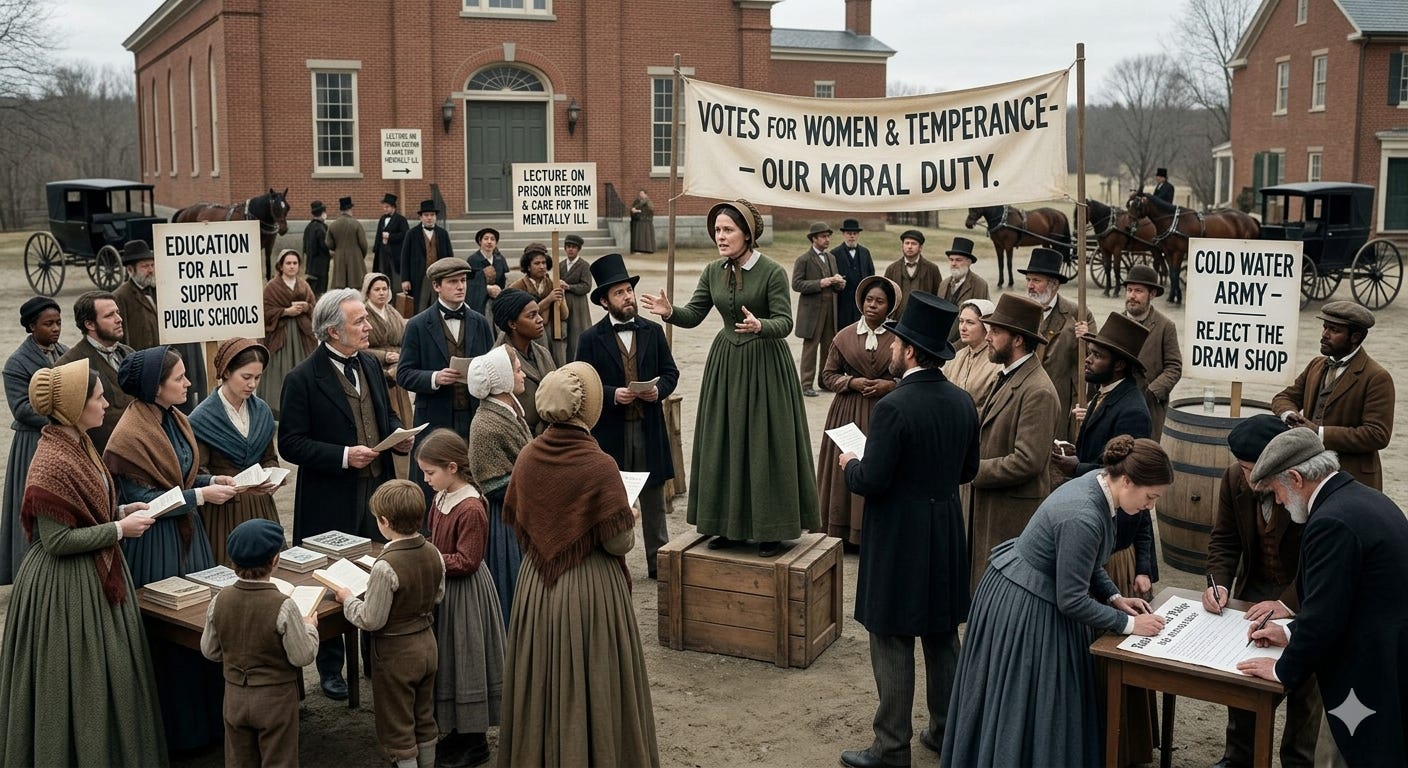
One major impact of the reform era appeared in education. Reformers increasingly viewed public education as necessary for democracy and social stability. Horace Mann argued that educated citizens strengthened republican government and reduced poverty and crime. His work helped expand tax-supported public schools and improve teacher training through normal schools. Educational reform also created broader opportunities for women and children who previously had limited access to formal learning. Literacy rates increased, and schools became more common across northern states. Americans increasingly viewed education as a public responsibility rather than a private privilege. This shift reshaped the country’s expectations about citizenship and opportunity.
The temperance movement also revealed how reformers attempted to shape everyday behavior. Alcohol abuse affected workplaces, families, and public life throughout the early nineteenth century. Reformers believed excessive drinking damaged moral character and weakened society. Organizations such as the American Temperance Society encouraged abstinence and organized campaigns across the country. Temperance literature and public lectures reached large audiences and helped reduce alcohol consumption in many communities. The movement also demonstrated the growing influence of women in public reform campaigns. Many women viewed temperance as a way to protect families from domestic violence, poverty, and instability caused by alcoholism.
The antebellum reform period also transformed the role of women in American society. Industrialization increasingly separated men and women into different economic roles, while reform movements created new opportunities for women to enter public life. Female activists became leaders in abolitionism, temperance, education, and eventually women’s rights. Figures such as Elizabeth Cady Stanton, Lucretia Mott, Susan B. Anthony, and the Grimké sisters challenged long-standing assumptions about women’s place in society.
The Seneca Falls Convention of 1848 marked a turning point in the women’s rights movement. The Declaration of Sentiments demanded greater equality and called for women’s suffrage. Many Americans mocked the movement at the time, though the convention launched a national conversation that continued for decades. Women gained increasing access to education and property rights during the antebellum years, and reform work gave many women experience as organizers, speakers, and political thinkers. These developments laid the foundation for later advances in women’s rights.
Reform movements also changed how Americans viewed social problems and human suffering. Dorothea Dix exposed the terrible treatment of the mentally ill in prisons and poorhouses. Her investigations persuaded states to create hospitals and asylums intended for care rather than punishment. Prison reformers promoted rehabilitation and argued that criminals could improve through discipline and education. These efforts reflected a broader belief that society could address problems through organized reform instead of accepting suffering as unavoidable.
The reform era also encouraged experimentation with alternative ways of living. Utopian communities such as Brook Farm, New Harmony, and the Oneida Colony attempted to create cooperative societies based on shared labor and moral ideals. Although many of these communities struggled to survive, they reflected the period’s optimism and willingness to challenge traditional institutions. Americans increasingly believed social systems could be redesigned to create fairer and more moral communities.
The antebellum reform movements reshaped the United States by expanding education, increasing women’s participation in public life, improving social institutions, and promoting the belief that ordinary citizens could change society. These reforms emerged from the religious energy and democratic spirit of the age. They encouraged Americans to think critically about injustice, morality, and the responsibilities of citizenship. By the eve of the Civil War, reform movements had already transformed the nation’s culture and created expectations for future social change that would continue long after the antebellum era ended.